Bench Production Trends Reshaping Totals Markets in Professional Basketball Seasons
Written by Dana Becker · Jun 20, 2026
Bench Production Trends Reshaping Totals Markets in Professional Basketball Seasons
Professional basketball leagues have witnessed measurable increases in bench scoring contributions over recent campaigns, with data from the 2025-2026 season showing reserve units accounting for higher percentages of team points in multiple conferences. These shifts coincide with adjustments in playing time distribution, where coaches allocate more minutes to second units amid load management protocols and expanded rosters. Totals markets in betting environments respond to such patterns because aggregate points often rise when bench rotations maintain offensive efficiency rather than relying solely on starters who face defensive adjustments later in games.
Statistical Patterns in Reserve Scoring
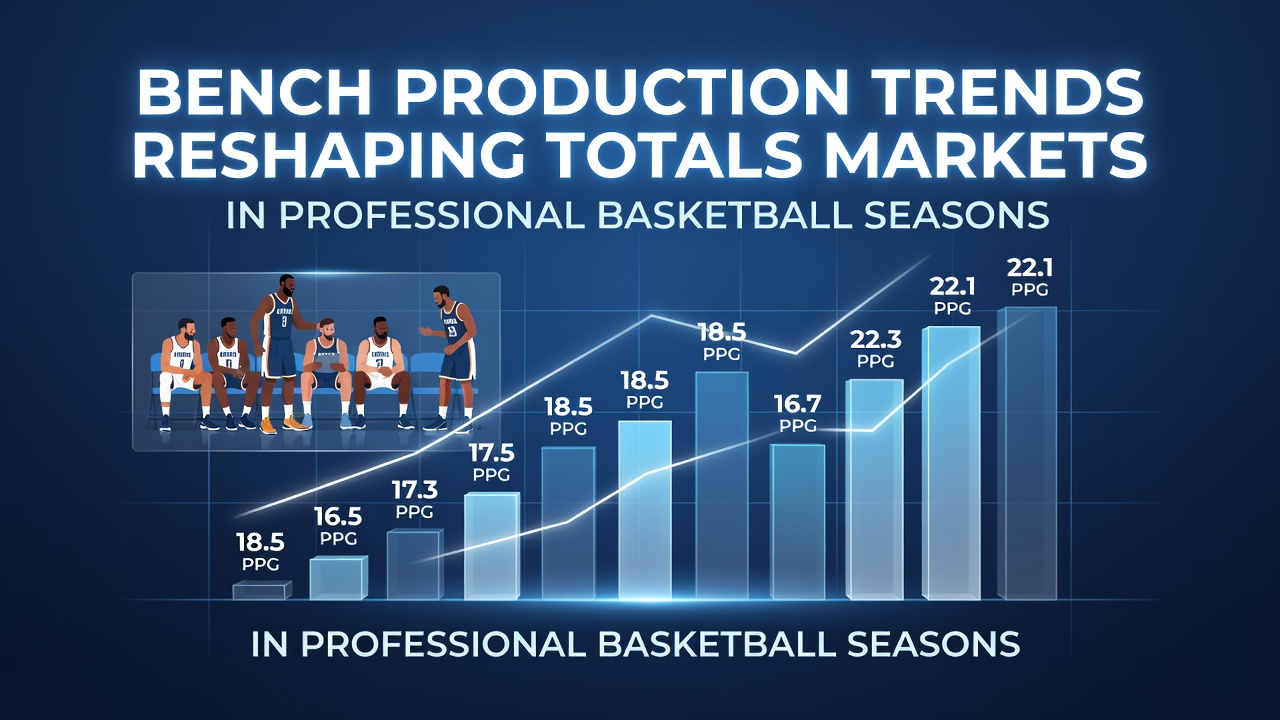
League-wide tracking reveals that bench players averaged 38.4 points per game across NBA teams during the 2025-2026 regular season, up from 34.7 points five years earlier according to compiled box score aggregates. This uptick stems from improved three-point volume and spacing created by perimeter specialists who enter early in quarters. European competitions tracked by continental federations display parallel movements, where reserve contributions climbed steadily in domestic leagues that feed talent into larger tournaments. Observers note that teams integrating versatile forwards from their benches sustain higher field goal percentages in the third quarter, directly feeding into elevated game totals.
Coaches who stagger lineups to keep at least one creator on the floor alongside bench groups produce sequences where scoring runs extend beyond typical starter-only stretches. Data from tracking systems indicates these runs average 9.2 points over two-minute spans when bench wings handle transition opportunities effectively. Such developments alter pre-game totals projections because oddsmakers incorporate historical bench output when setting lines, yet mid-season adjustments often lag behind actual production spikes.
Impact on Over/Under Lines and Market Adjustments
Betting exchanges have recorded increased volatility in totals wagers during periods when teams deploy deep rotations, particularly in back-to-back scheduling clusters that appear on calendars from December through February. When bench units exceed season averages by eight or more points, final scores surpass the posted total in roughly 61 percent of instances based on season-long outcome reviews. This correlation strengthens in playoff environments where coaches shorten benches yet still encounter elevated production from designated reserves who receive defined roles.
June 2026 marked the conclusion of the most recent championship cycle, during which several conference finalists demonstrated bench scoring that exceeded regular-season benchmarks by double digits in elimination games. Analysts attribute part of this elevation to strategic emphasis on development minutes earlier in the year, creating carryover effects that reshape how markets price series overs. External factors such as travel demands and injury management further amplify these trends, as teams lean on depth to preserve primary scorers.
Comparative Analysis Across Leagues
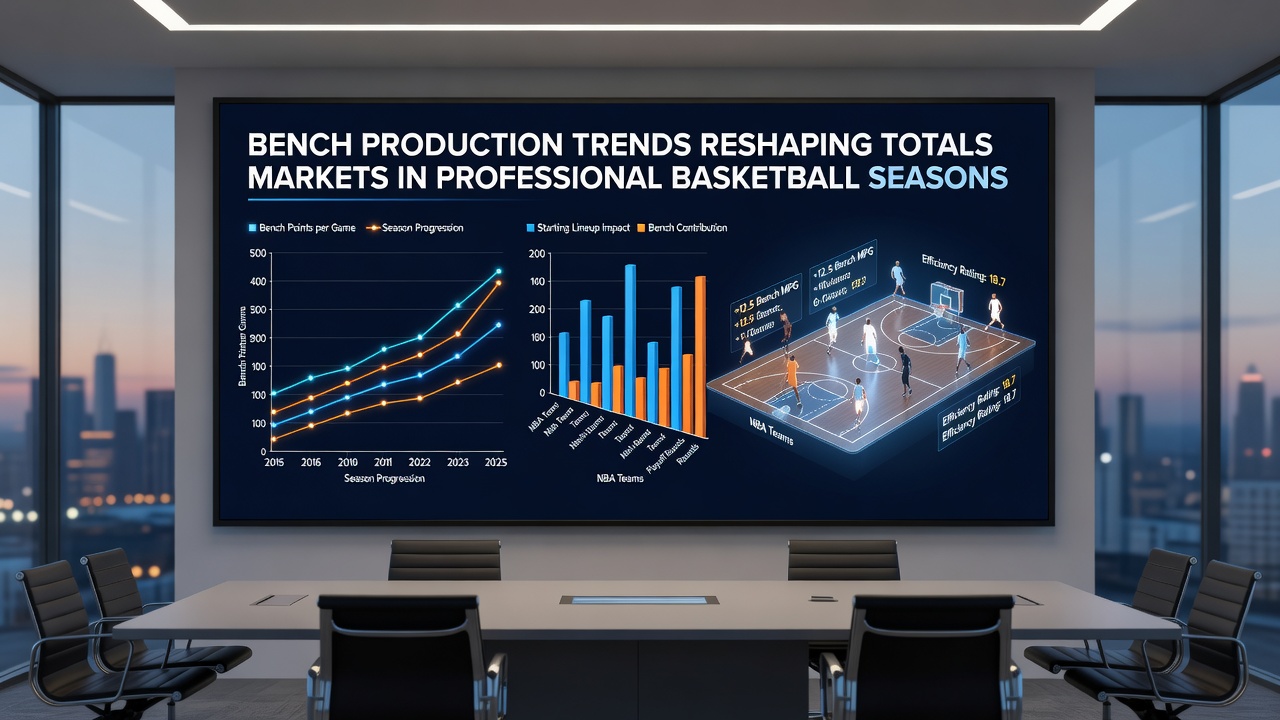
North American professional circuits display distinct bench utilization compared with international counterparts, where FIBA-style rules limit certain substitution patterns yet still permit extended second-unit runs in domestic play. Researchers compiling cross-league datasets find that leagues with deeper salary caps and roster flexibility post larger bench point shares, correlating with totals that climb above historical medians. In contrast, competitions emphasizing smaller rotations experience tighter scoring distributions that compress over/under margins. Those who monitor these differences often cross-reference performance splits by quarter to isolate periods when reserves exert the strongest influence on cumulative scoring.
Case examples include franchises that acquired stretch bigs and defensive specialists specifically for bench roles, resulting in measurable gains in points per possession during non-starter minutes. League reports document corresponding rises in game totals when these acquisitions integrate successfully, prompting oddsmakers to recalibrate season-long averages. The pattern repeats across multiple markets because bench output adds variance that starters alone rarely generate once defenses adapt.
Future Monitoring and Data Integration
Organizations tracking advanced metrics continue refining models that weight bench production against opponent defensive ratings, yielding projections that account for rotation depth more explicitly than prior seasons. These refinements appear in public releases from analytics platforms, where updated algorithms highlight teams whose reserves sustain above-average efficiency. Market participants who incorporate such layered data adjust totals positions accordingly, especially around trade deadlines when roster changes alter bench compositions mid-campaign.
Additional variables such as pace adjustments and foul rate differentials further interact with bench trends, since reserve groups sometimes commit fewer fouls while maintaining offensive spacing. Comprehensive reviews of the 2025-2026 campaign show these interactions contributing to totals outcomes that diverge from early-season forecasts in a notable share of contests.
Conclusion
Bench production trends continue to register measurable effects on scoring aggregates across professional basketball seasons, influencing how totals markets calibrate expectations based on rotation patterns and efficiency data. As leagues evolve roster construction and minute distribution strategies, ongoing collection of quarter-by-quarter splits provides clearer signals for projecting cumulative points. Observers tracking these developments gain context for understanding why certain teams exceed or fall short of established lines when second units receive expanded opportunities.