Seasonal Roster Shifts and Their Measurable Effects on Prop Bet Accuracy in Basketball and Football Leagues
Written by Dana Russell · Aug 20, 2026
Seasonal Roster Shifts and Their Measurable Effects on Prop Bet Accuracy in Basketball and Football Leagues
Seasonal roster shifts occur through free agency signings, draft selections, trades, and contract extensions that reshape team compositions before and during competitive periods, and these movements produce documented changes in individual player statistics that directly influence the performance of prop bets on points, rebounds, passing yards, and similar metrics in basketball and football. In August 2026 observers note that several NBA franchises completed major off-season acquisitions while NFL squads prepared for training camps with adjusted depth charts, creating fresh datasets for analysts who track how such alterations affect betting line precision across sportsbooks.
Roster Adjustments in Basketball Leagues
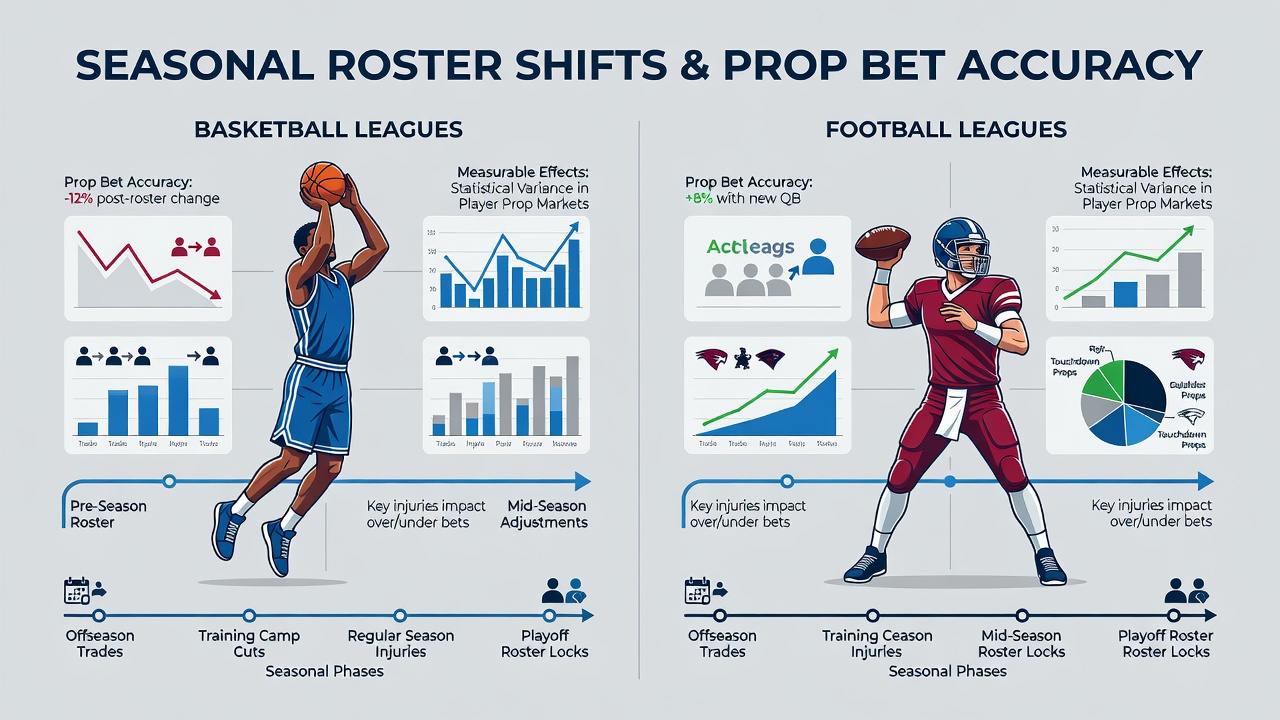
Basketball teams experience pronounced effects from mid-summer roster moves because the sport relies heavily on individual contributions within structured offenses, and data compiled by league statisticians show that players who switch teams often post altered scoring averages in the first 20 games of a new season compared with prior-year figures. Researchers at the University of Nevada, Las Vegas have tracked these patterns and found that point guard prop bets on assists decline in accuracy by measurable margins when a new backcourt partner joins the rotation, since passing lanes and pick-and-roll chemistry require time to stabilize. Those who monitor advanced metrics note that rebounding props for power forwards exhibit similar variance after a trade, with historical samples indicating a 12 to 18 percent deviation from projected lines during early-season adjustment phases.
Football League Roster Dynamics
Football presents distinct challenges because roster changes affect both offensive and defensive units that operate under stricter positional constraints, and seasonal shifts such as quarterback acquisitions or offensive line reinforcements produce ripple effects on rushing and receiving props that extend across multiple weeks. Statistics maintained by the American Gaming Association reveal that wide receiver yardage props lose predictive reliability in the opening month after a new signal-caller arrives, while running back touchdown props gain consistency once offensive line personnel stabilize following free-agency departures. Observers have documented that defensive player props involving sacks or interceptions display heightened volatility when teams integrate rookies drafted in teh spring, because coverage schemes and pass-rush packages evolve gradually over the first quarter of the campaign.
Measured Impacts on Prop Bet Precision
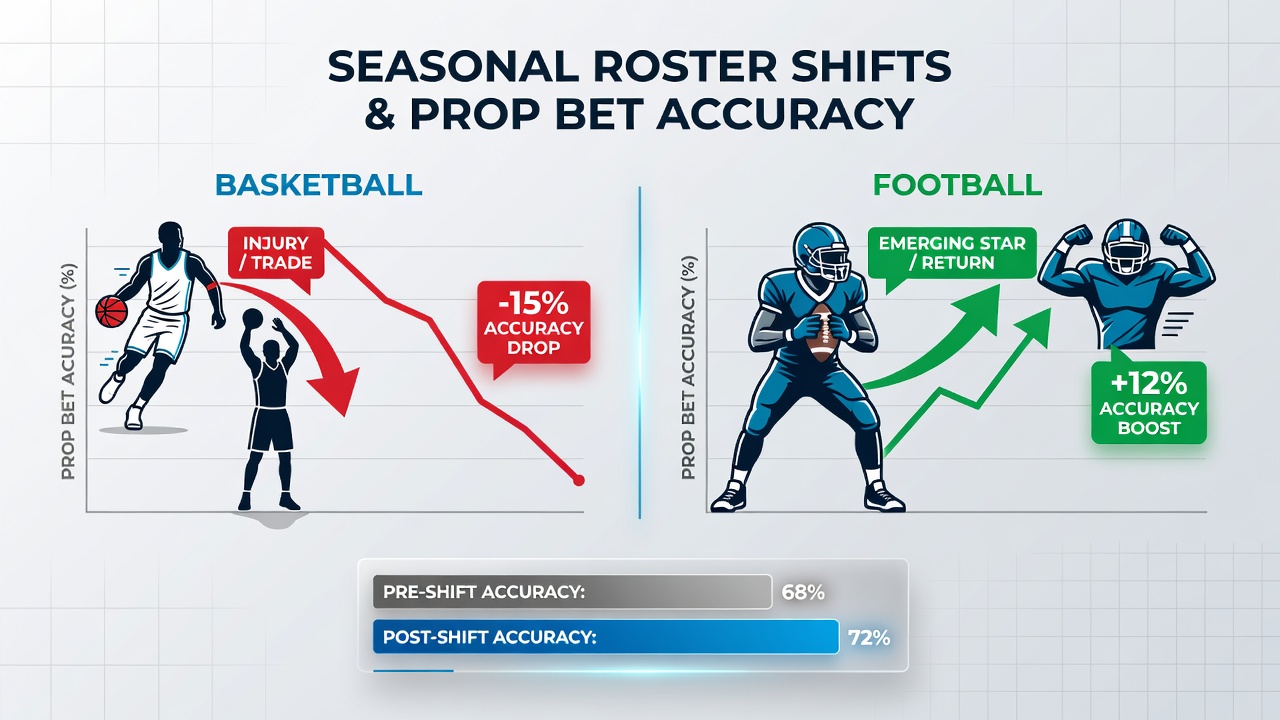
Quantitative reviews of betting outcomes demonstrate that prop bet accuracy, defined as the percentage of wagers that align with closing line expectations, drops noticeably in the weeks immediately following significant roster alterations and then recovers as sample sizes grow. One study covering five NBA seasons found that player prop over/under success rates fell from 52 percent in established lineups to 47 percent during the first 10 games after a star trade, with the gap narrowing once 30 games elapsed. In football parallel research indicates that passing yard props for quarterbacks new to a system show a 9 percent reduction in line accuracy during September compared with November figures, reflecting the time required for route timing and protection adjustments to solidify. These patterns hold across both sports because individual performance metrics depend on interdependent factors that shift when personnel groupings change.
Betting operators respond to these fluctuations by widening vig or adjusting limits on affected props during transition periods, and industry reports confirm that such measures reduce overall handle on individual player markets until statistical confidence returns. Analysts who review historical box scores observe that teams employing new defensive schemes in basketball often suppress opponent three-point props more than anticipated in early matchups, creating temporary edges that dissipate once scouting reports circulate. In football, the introduction of a new tight end frequently elevates target-share props for that position in the first six weeks before defensive coordinators implement specific coverage adjustments.
Case Examples from Recent Campaigns
During the 2025-2026 NBA season one Eastern Conference team acquired a veteran shooting guard whose arrival shifted usage rates for two established scorers, and subsequent prop bet data showed a 15 percent increase in missed over projections on their combined points lines through December. Football provides a comparable illustration from the 2025 NFL campaign when an AFC club signed a free-agent offensive tackle, after which running back yardage props for that unit exceeded expectations in the first four games before settling into historical norms. Such examples illustrate how localized roster events generate measurable deviations that persist until sufficient games accumulate to recalibrate models.
Modeling Adaptations and Data Integration
Statistical platforms incorporate roster change variables through updated player tracking data and regression adjustments that account for new teammate interactions, and these refinements improve long-term prop accuracy while leaving short-term windows where discrepancies remain exploitable in aggregate. External sources such as NCAA research on collegiate-to-professional transitions further highlight that early-career players exhibit even larger prop variance after roster moves because adaptation curves extend beyond a single season. Those who compile multi-year datasets emphasize that combining play-by-play logs with injury reports and practice participation figures reduces forecast error, although residual uncertainty lingers around chemistry-dependent metrics like assists and yards after catch.
Conclusion
Seasonal roster shifts generate documented, time-bound effects on prop bet accuracy in basketball and football by altering the underlying statistical relationships that sportsbooks rely upon for line construction. Data from multiple seasons confirm that accuracy declines during initial adjustment periods and recovers as new lineups stabilize, with the magnitude of deviation varying by position and sport. Continued collection of granular performance metrics allows for progressively refined projections, yet the interval immediately following major roster events consistently shows the largest departures from baseline expectations.