Set-Piece Conversion Metrics Guide Live Football Betting Shifts
Written by Dana Becker · Nov 6, 2026
Set-Piece Conversion Metrics Guide Live Football Betting Shifts
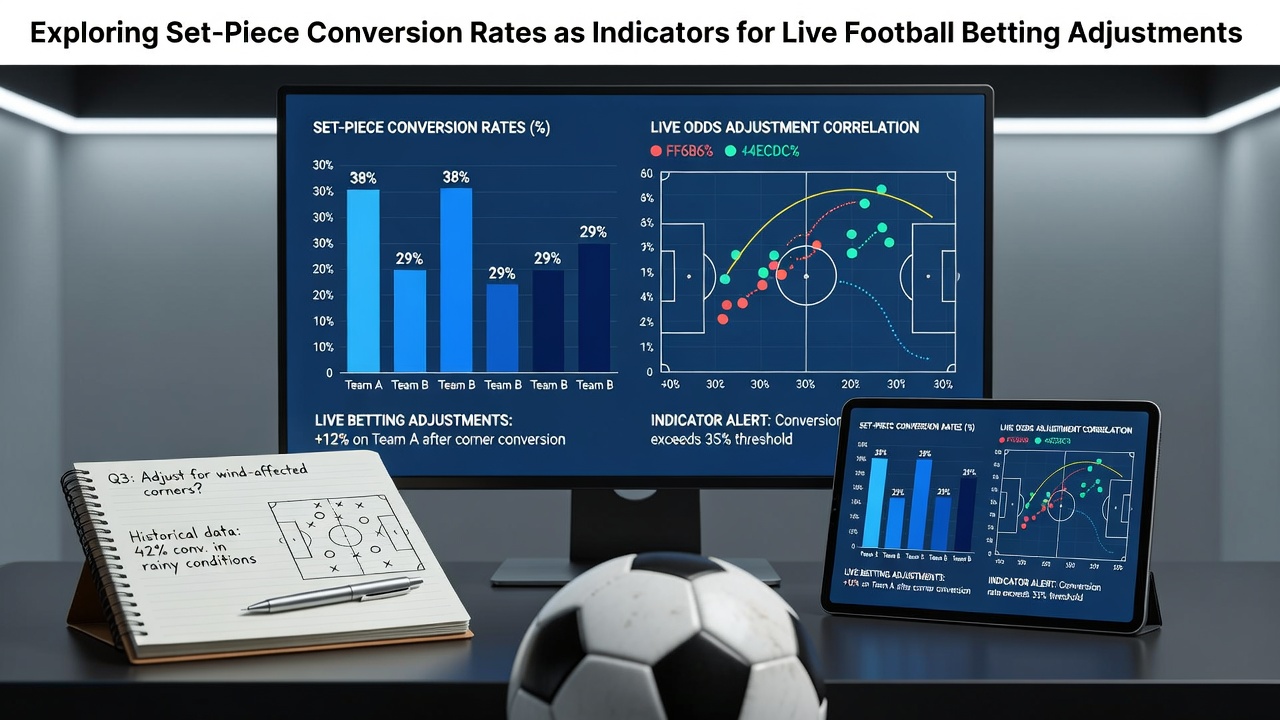
Analysts track set-piece conversion rates because these figures deliver measurable signals for adjusting live football bets during matches, and data from multiple European competitions shows corners, free kicks, and penalties convert at predictable percentages that shift as games progress. Teams maintain distinct efficiencies in these situations across the 2025-2026 season, with top Premier League sides converting corners into goals at rates between 8 and 12 percent according to aggregated match logs.
Understanding Set-Piece Categories and Baseline Rates
Direct free kicks, indirect free kicks, corners, and penalties each carry separate conversion statistics that live bettors monitor because initial pre-match odds rarely account for in-game fatigue or tactical adjustments. Research from Opta indicates that penalty conversion across Europe's five major leagues averaged 78 percent in the 2025 calendar year, while corner conversion hovered near 3.2 goals per 100 attempts when teams faced organized defenses. These baselines provide reference points when live markets react to early set-piece outcomes.
Corner Efficiency Patterns Across Leagues
Teams in Serie A demonstrate lower corner conversion than Bundesliga counterparts because defensive structures in Italian matches often pack the six-yard box more tightly, and figures released by Stats Perform reveal Bundesliga sides averaged 0.41 goals from corners per game through the first half of the 2026 campaign. Observers note that when a side fails to convert its first three corners in a match, live odds on over 2.5 goals frequently lengthen because bookmakers adjust implied probabilities based on observed inefficiency. Conversely, teams that score from set pieces early see their in-play lines compress as algorithms recalibrate expected goal totals.
Live Betting Adjustments Triggered by Conversion Data
Bookmakers update set-piece related markets within seconds of each dead-ball situation because real-time conversion tracking software flags deviations from seasonal norms. When a Premier League side with a 10 percent corner conversion rate suddenly fails on five consecutive attempts, traders often push the next-goal market toward the opposing team or toward under totals in the remaining minutes. Data indicates these adjustments occur most sharply between the 60th and 75th minutes when player fatigue increases error rates on delivery and finishing.
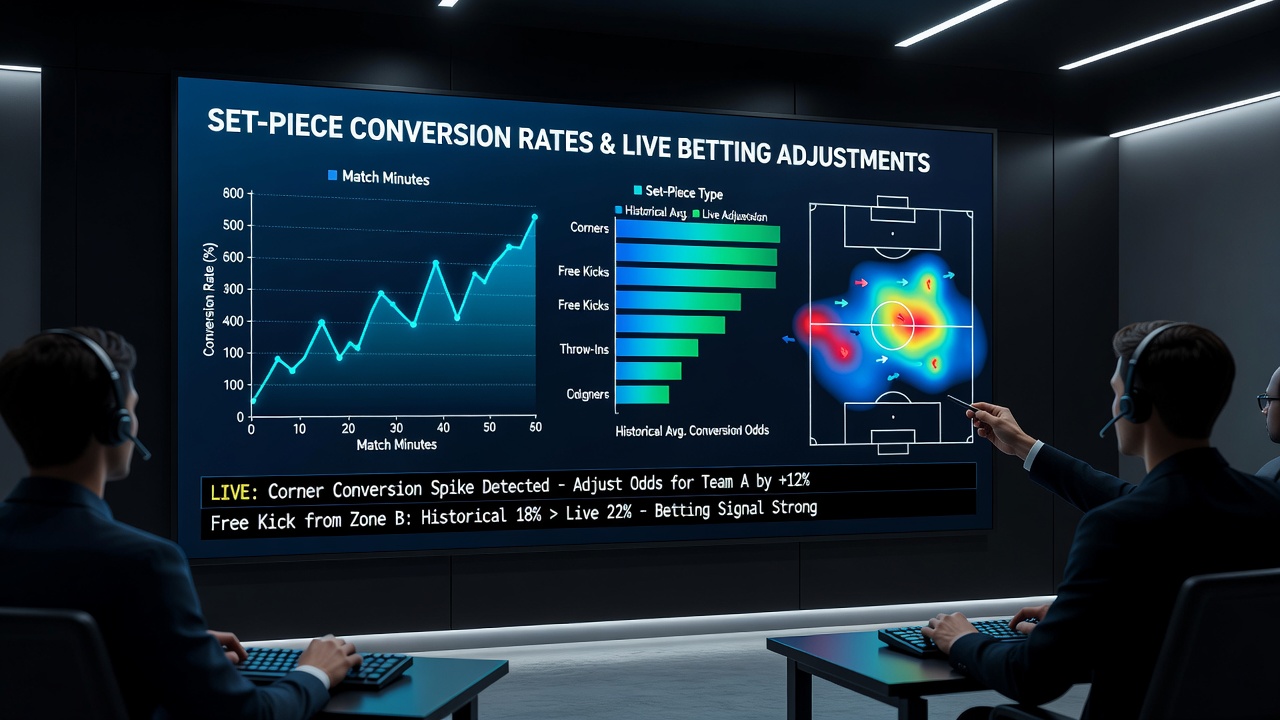
Penalty markets move even faster because conversion rates carry higher weight in expected goal models. A team awarded its second penalty after converting the first at the league average sees its win probability rise immediately, while markets on total goals adjust upward by roughly 0.3 to 0.5 goals according to historical in-play data sets. Those monitoring these shifts often combine conversion trends with substitution patterns because fresh attackers frequently improve delivery accuracy on corners and free kicks.
Regional Variations and November 2026 Context
November fixtures across Europe introduce additional variables such as early winter pitches that affect ball movement on set pieces, and conversion rates in the Champions League group stage have shown a measurable drop of 1.8 percentage points compared with September and October averages. Australian regulatory bodies publish annual reports on sports betting integrity that include football data, and Victorian Commission for Gambling and Liquor Regulation figures from 2025 noted increased live wagering volumes on set-piece markets during European winter months. These reports help contextualize how conversion rates influence betting adjustments when weather and fixture congestion alter expected outcomes.
Practical Monitoring Approaches
Bettors and analysts cross-reference live conversion percentages against rolling 10-game team averages to identify when markets have overreacted or underreacted to recent set-piece sequences. A side that enters a match with a 9 percent corner conversion rate but scores twice from set pieces in the opening 30 minutes often sees its live total-goals line move upward faster than models based solely on open-play expected goals would predict. This discrepancy arises because markets incorporate teh immediate evidence of set-piece efficiency rather than season-long aggregates alone.
Conclusion
Set-piece conversion rates function as reliable indicators because they rest on quantifiable historical patterns that update continuously during matches, and live betting markets respond directly to deviations from those patterns. Teams that sustain or improve their efficiency in these situations create measurable edges for in-play adjustments across corners, free kicks, and penalties. Observers continue to refine models that integrate these metrics with substitution timing and pitch conditions to capture the evolving probabilities that define football betting during the 2026 season.