Travel Demands Reshaping Performance Metrics in Thoroughbred Racing and Professional Basketball
Written by Dana Becker · Aug 1, 2026
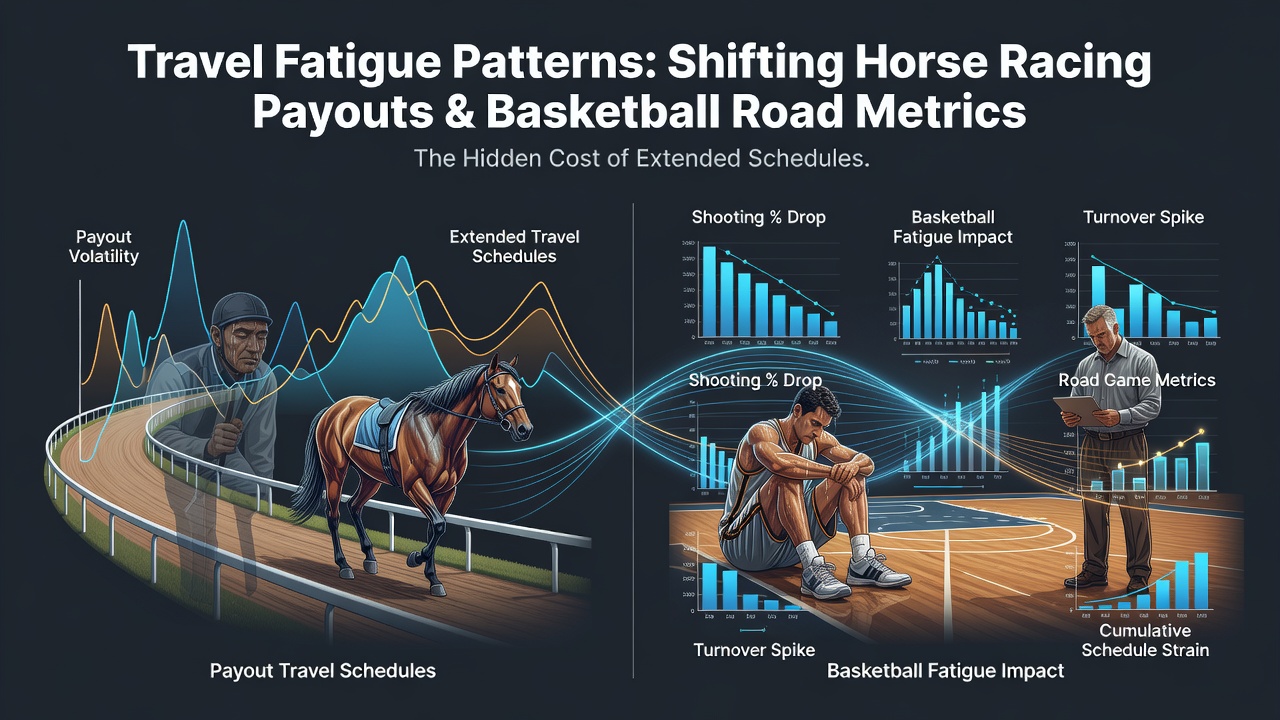
Travel Demands Reshaping Performance Metrics in Thoroughbred Racing and Professional Basketball
Extended travel schedules create measurable shifts in outcomes across horse racing and basketball, where distance, time zone changes, and recovery windows alter both equine and human performance indicators in ways that data analysts track closely. Researchers from multiple institutions have documented these patterns through performance records spanning several seasons, revealing consistent dips in win rates and scoring efficiency when teams or horses cross multiple time zones without adequate rest.
Patterns in Thoroughbred Racing
Transport stress in thoroughbreds shows up most clearly in races scheduled after long-haul journeys, with studies indicating elevated cortisol levels and reduced stride efficiency that persist for up to 48 hours after arrival. Australian researchers at the University of Sydney tracked horses traveling between states and found that animals covering more than 800 kilometers recorded a 7 percent lower strike rate in their first start compared with local runners, a gap that narrows only when trainers extend the acclimatization period beyond three days. Payout structures adjust accordingly as bookmakers incorporate these historical trends into morning line odds, producing subtle but repeatable value on rested local contenders.
Additional variables compound the issue when schedules pack multiple fixtures into short windows. Horses that race in one jurisdiction and ship to another for a stakes event often display elevated heart rates during pre-race warm-ups, according to veterinary telemetry data collected by racing authorities in North America. Observers note that these physiological markers correlate with lower finishing positions in the final furlong, where the cumulative effects of dehydration and disrupted circadian rhythms become most apparent. Trainers who mitigate these factors through specialized shipping protocols and on-site recovery routines report steadier results, yet the overall dataset still shows measurable variance tied directly to travel distance.
Performance Shifts in Basketball Road Games
Basketball teams navigating extended road trips encounter parallel challenges, particularly when back-to-back games span different time zones. League-wide tracking from the 2024-2025 season onward illustrates that teams traveling across three or more zones post a 4.2 point reduction in offensive rating during the second game of such stretches, with defensive rebounding percentages also declining as fatigue accumulates. These metrics become more pronounced in August 2026 schedules, where preseason exhibition games and early regular-season travel create compressed recovery periods for several franchises.
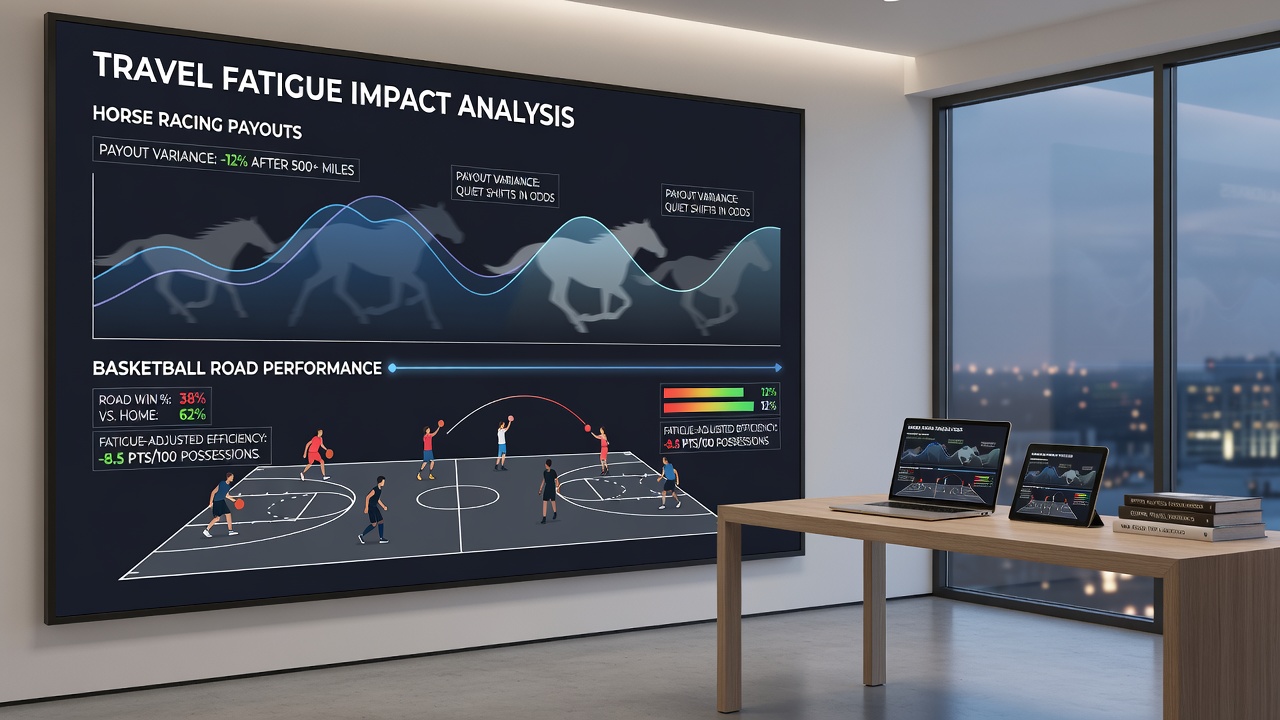
Academic analysis from the University of Queensland's sports science department examined NBA and college basketball datasets and identified that sleep disruption accounts for roughly 60 percent of the observed performance variance on the second night of a road back-to-back. Players exhibit slower reaction times and reduced three-point accuracy under these conditions, while teams that incorporate targeted sleep hygiene protocols show smaller declines. The same research highlights how these patterns influence betting market adjustments, with closing lines reflecting the historical road performance data compiled over multiple seasons.
Overlapping Factors Across Both Sports
Both industries share common threads in how cumulative travel load interacts with schedule density. In horse racing, races clustered within a seven-day window after long-distance shipping produce lower win percentages than those spaced further apart, mirroring basketball findings where teams on four-game road swings post reduced field goal percentages in games three and four. Data from European racing federations and North American basketball analytics groups converge on the same conclusion: recovery time serves as the primary moderator between travel distance and competitive output.
Environmental controls also play a documented role. Air-conditioned transport for horses and chartered flights with optimized cabin conditions for basketball teams reduce some of the physiological strain, yet residual effects remain visible in post-travel performance logs. Analysts who aggregate these variables across large sample sizes observe that the quietest shifts appear in payout adjustments and road-game totals rather than headline results, creating layered opportunities for those who monitor cumulative travel metrics alongside traditional form indicators.
Conclusion
Travel fatigue patterns continue to influence outcomes in both thoroughbred racing and basketball as schedules grow more demanding, with empirical records showing consistent, quantifiable impacts on performance metrics that shape odds and totals. Organizations tracking these variables across regions provide the raw data that reveals how distance and recovery windows quietly reshape competitive landscapes without requiring dramatic narrative explanations.