Travel Distances Reshaping Away Results Across Continental Football Fixtures and Multi-Leg Selection Refinements
Written by Dana Russell · Aug 11, 2026
Travel Distances Reshaping Away Results Across Continental Football Fixtures and Multi-Leg Selection Refinements
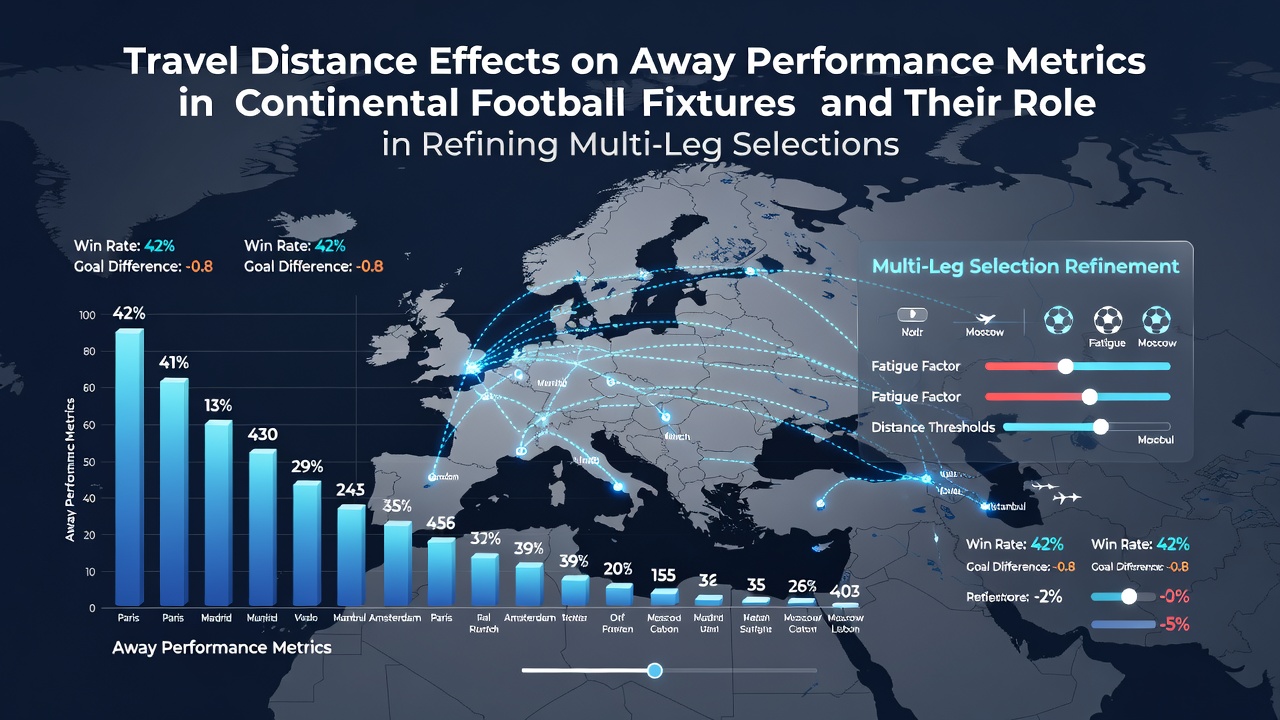
Travel distances in continental football create measurable shifts in away team performance metrics, and data from multiple European competitions shows consistent patterns that analysts track when building multi-leg selections. Long journeys across time zones or through congested transport routes often correlate with reduced high-intensity running, lower pass completion rates, and fewer shots on target for visiting sides, while shorter domestic hops within the same country produce smaller variances.
Performance Data Patterns in Major Competitions
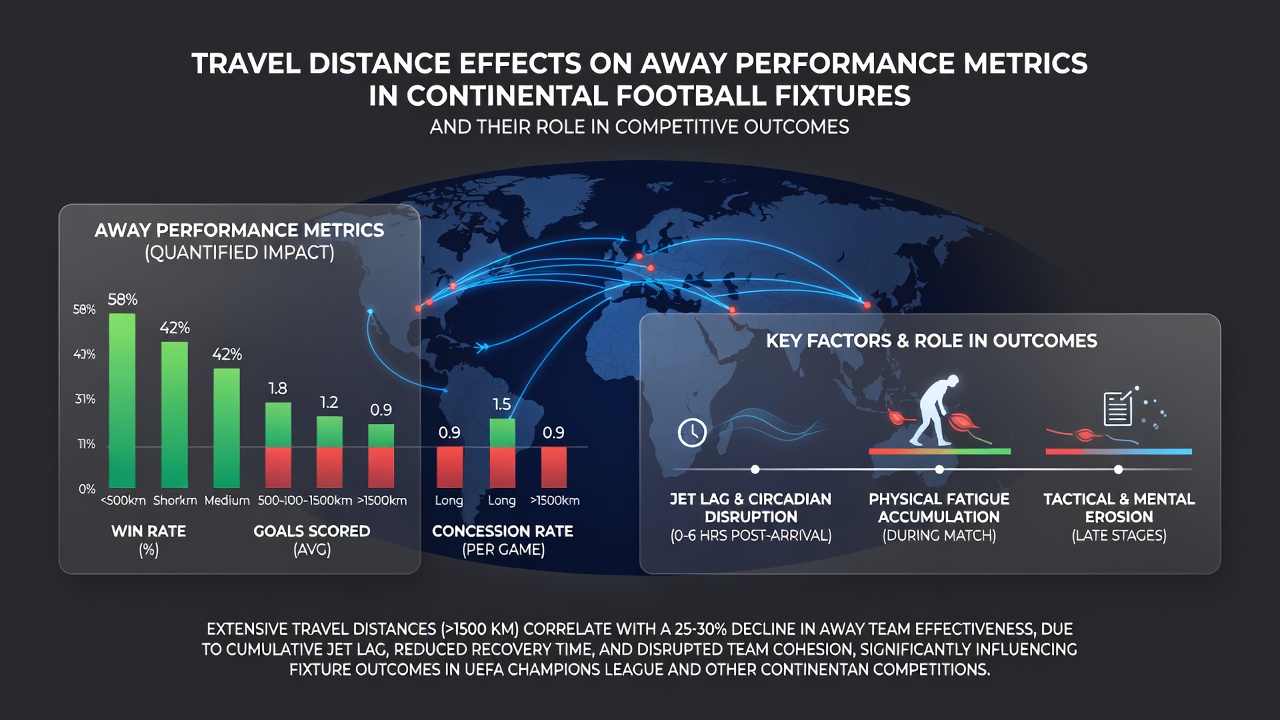
Researchers examining UEFA Champions League and Europa League matches between 2018 and 2025 found that teams traveling more than 1,500 kilometers recorded an average drop of 12 percent in expected goals created away from home compared with shorter trips under 800 kilometers. These figures come from aggregated match data that includes both group stages and knockout rounds, where recovery windows shrink because of fixture congestion. Observers note that clubs based in northern Europe traveling to southern venues in August 2026 encounter additional heat and humidity factors that compound the distance effect, leading to earlier substitutions and altered tactical setups.
Stats from the same dataset reveal that away teams logging over four hours of flight time concede 0.4 more goals per game on average than teams crossing fewer than two time zones. The pattern holds across multiple leagues, although the magnitude varies by squad depth and the number of days between matches. Analysts tracking these metrics often cross-reference them with player tracking data from clubs that publish GPS outputs, showing elevated fatigue markers in central midfielders and full-backs who log the highest distances during travel weeks.
Recovery Windows and Fixture Scheduling
European governing bodies publish annual calendars that list kickoff times and travel requirements, and those schedules highlight clusters where away sides face compressed recovery periods. When a team plays a domestic league game on Saturday and then travels across the continent for a Tuesday fixture, the gap between arrival and match start frequently falls below 48 hours. Studies from sports science departments indicate that neuromuscular recovery markers remain depressed in such windows, which translates into measurable declines in sprint frequency and duel success rates during the opening 30 minutes.
Coaches respond to these constraints by rotating squads earlier in the season or altering pressing triggers to conserve energy. Data from the 2024-2025 season shows that teams employing such rotations maintained closer to their baseline away metrics even after long-haul trips, whereas unchanged lineups experienced steeper drops. Those adjustments become visible in real-time statistics feeds that multi-leg selectors monitor when weighing late-round inclusions.
Application to Multi-Leg Accumulator Construction
Selectors building multi-leg wagers incorporate travel-adjusted performance baselines to refine probability estimates for individual legs. When historical data shows a visiting side averaging 1.1 expected goals after long-distance travel versus 1.6 after short trips, that differential can shift over/under lines and handicap assessments for that fixture. Aggregators who layer several such matches together apply filters that exclude or reduce stakes on legs where travel fatigue metrics exceed defined thresholds.
Publicly available match reports and third-party analytics platforms supply the raw numbers that feed these models, and patterns emerge most clearly in competitions spanning wide geographic areas such as the Champions League or Conference League. Teams from peripheral leagues traveling to central European venues repeatedly appear in datasets with suppressed away scoring outputs, which informs decisions about which combinations carry lower variance when multiple legs are stacked.
Geographic and Seasonal Variables
Latitude differences add another layer because teams crossing from Scandinavia to the Mediterranean in late summer face both distance and climate shifts that affect hydration and muscle response. Data collected during August 2026 qualifiers already indicates early-season spikes in these effects before squads adapt to the new campaign rhythm. Eastern European sides traveling westward encounter similar challenges when daylight and meal timing change abruptly, and performance logs capture slower build-up play in the first half as players adjust.
League-specific reports compiled by national associations track these variables separately from betting markets, providing neutral benchmarks that researchers use to validate models. The resulting insights help isolate distance as an independent factor rather than conflating it with squad quality or tactical style.
Conclusion
Distance-related performance shifts appear consistently across continental football records and supply quantifiable inputs for refining multi-leg selections. Analysts continue to integrate fresh match data each season, updating thresholds as recovery protocols and travel logistics evolve. The approach relies on objective metrics rather than assumptions, allowing selectors to adjust expectations for away sides facing extended journeys in upcoming European campaigns.